
+86 18652221058
- Chinese
- French
- German
- Portuguese
- Spanish
- Russian
- Japanese
- Korean
- Arabic
- Irish
- Greek
- Turkish
- Italian
- Danish
- Romanian
- Indonesian
- Czech
- Afrikaans
- Swedish
- Polish
- Basque
- Catalan
- Esperanto
- Hindi
- Lao
- Albanian
- Amharic
- Armenian
- Azerbaijani
- Belarusian
- Bengali
- Bosnian
- Bulgarian
- Cebuano
- Chichewa
- Corsican
- Croatian
- Dutch
- Estonian
- Filipino
- Finnish
- Frisian
- Galician
- Georgian
- Gujarati
- Haitian
- Hausa
- Hawaiian
- Hebrew
- Hmong
- Hungarian
- Icelandic
- Igbo
- Javanese
- Kannada
- Kazakh
- Khmer
- Kurdish
- Kyrgyz
- Latin
- Latvian
- Lithuanian
- Luxembou..
- Macedonian
- Malagasy
- Malay
- Malayalam
- Maltese
- Maori
- Marathi
- Mongolian
- Burmese
- Nepali
- Norwegian
- Pashto
- Persian
- Punjabi
- Serbian
- Sesotho
- Sinhala
- Slovak
- Slovenian
- Somali
- Samoan
- Scots Gaelic
- Shona
- Sindhi
- Sundanese
- Swahili
- Tajik
- Tamil
- Telugu
- Thai
- Ukrainian
- Urdu
- Uzbek
- Vietnamese
- Welsh
- Xhosa
- Yiddish
- Yoruba
- Zulu
- Kinyarwanda
- Tatar
- Oriya
- Turkmen
- Uyghur

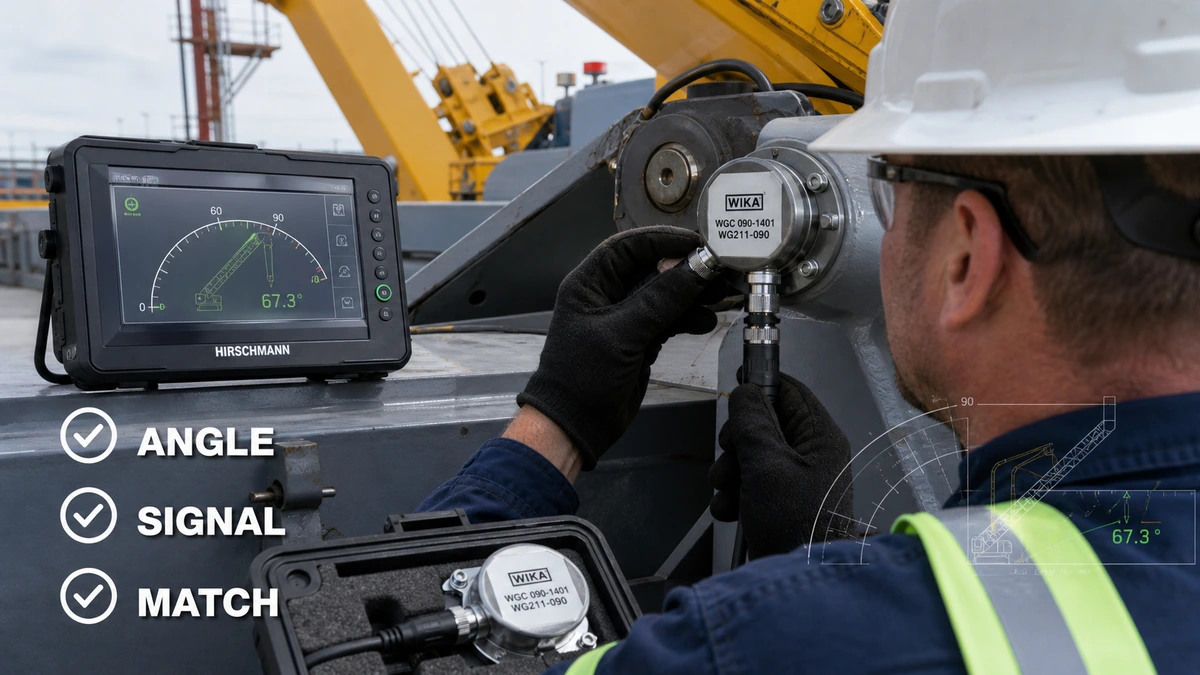
To match a crane boom angle sensor, buyers should identify the crane make, model, serial number, control or load-moment-indicator system, and original sensor part number. Then verify the connector, supply voltage, output signal or bus protocol, mounting pattern, shaft or housing orientation, measurement range, programming, and calibration procedure. Similar appearance alone does not establish compatibility.
> Safety note: A boom angle signal may be used by a crane safety or rated-capacity system. Replacement, calibration, testing, and return to service should follow the crane and system manufacturer’s procedures and be performed by qualified personnel. Never bypass an alarm or protective function to keep the crane operating.
Crane Boom Angle Sensor Compatibility Evidence
| Evidence | Why it matters |
|---|---|
| Crane make, model, serial number, and year | Narrows the machine configuration |
| LMI/controller make and model | Identifies the receiving system |
| Original sensor part number and revision | Strongest starting point for cross-reference |
| Clear label and connector photos | Confirms markings, pin count, and keying |
| Mounting photos and dimensions | Checks bracket, bolt pattern, and orientation |
| Cable length and routing | Prevents installation and connector mismatch |
| Measured supply and signal information | Helps verify the electrical interface |
| Fault code and diagnostic results | Separates sensor failure from wiring or controller faults |
Begin With the Original Part Number
Record every character on the nameplate, including suffixes and revision marks. A base number may cover several electrical or mechanical variants. If the original number has been superseded, ask for written confirmation of the replacement relationship.
Crane-specific product families can help narrow the search. Buyers may review Hirschmann, SANY, XCMG, and Zoomlion angle-sensor categories, but the category name is not a substitute for exact part verification.
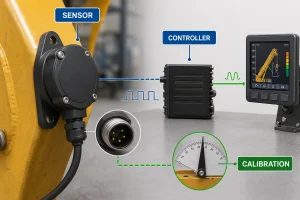
Verify the Electrical Interface
Two sensors can share a housing while using different electronics. Confirm:
- rated supply voltage and permissible range;
- analog, frequency, current, voltage, CAN, or other output;
- connector manufacturer, keying, pin count, and pin assignment;
- bus protocol, baud rate, node address, and termination if applicable;
- cable shielding and grounding arrangement;
- controller software or parameter requirements.
Do not apply power based on wire color alone. Use approved schematics and test procedures. If the old label is unreadable, provide the controller model, harness connector, wiring diagram, and machine serial number to the supplier.
Check Mechanical Fit and Orientation
Measure the complete mounting interface rather than only overall dimensions. Record the hole pattern, fastener size, locating features, shaft or pendulum orientation, connector direction, clearance envelope, and cable exit.
Angle sensors also depend on installation orientation. A mechanically fitting unit may report the wrong direction, offset, or range when mounted differently. Mark the boom position and sensor orientation in photos before removal, subject to the service procedure.
Confirm Range, Zero Point, and Calibration
Ask whether the proposed sensor is supplied as:
- a direct, preconfigured replacement;
- a configurable component requiring parameter setup;
- a sensor that requires zeroing or span calibration after installation.
The commissioning procedure should verify the indicated boom angle against the prescribed reference throughout the required movement, check fault monitoring, and confirm correct operation of the complete LMI or rated-capacity system. The acceptance result should be documented.
Diagnose Before Ordering
A wrong angle reading does not always mean the sensor itself has failed. Possible causes include damaged wiring, moisture in a connector, poor supply voltage, mechanical movement at the bracket, communication faults, controller configuration, or an incorrect calibration.
Before purchasing, record the displayed angle at known positions, active fault codes, supply readings, connector condition, and any recent repair history. Follow authorized diagnostic instructions; do not defeat interlocks during testing.
Crane Boom Angle Sensor RFQ Checklist
- crane manufacturer, model, serial number, and year;
- boom configuration;
- LMI/controller manufacturer and model;
- original sensor part number, suffix, and revision;
- label, connector, mounting, and installed-orientation photos;
- mounting dimensions and cable length;
- electrical interface and pinout, if available;
- fault description and diagnostic evidence;
- required quantity and spare quantity;
- destination and delivery requirement;
- programming, calibration, documentation, and warranty needs.
Confirm the Replacement Supply Terms
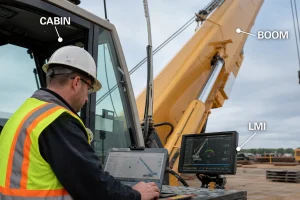
The quotation should identify the exact matched part, connector and cable scope, mounting hardware, calibration or parameter-setting requirement, documentation, warranty, and return conditions for an incorrect match. Ask the supplier to state sample or trial-order availability, minimum order quantity, customization limits, applicable test or certification evidence, protective packaging, lead time, shipping terms, and after-sales support. Price differences may reflect part revision, interface, cable assembly, calibration, accessories, documentation, quantity, and delivery urgency.
Frequently Asked Questions
Can a sensor be matched from a photograph?
A photo can narrow the options, but it rarely proves electrical, software, and calibration compatibility. Include the part number and machine information.
Is the connector enough to identify compatibility?
No. Identical connectors can carry different supply, signals, protocols, or pin assignments.
Must a replacement sensor be calibrated?
That depends on the sensor and crane system. Obtain the approved replacement and commissioning procedure for the exact configuration.
What if the original part number is obsolete?
Provide the complete old number and revision. Ask the supplier to document any supersession and identify required adapters, software, or parameter changes.
Can the crane return to work if the angle display looks correct?
Visual plausibility is not a complete acceptance test. Follow the prescribed functional testing and return-to-service requirements.
Request an Exact Compatibility Check
Browse angle sensor options and send the machine identity, original part number, controller details, and clear photos through the contact page. A documented match reduces the risk of ordering a physically similar but incompatible component.
Feature Product
-
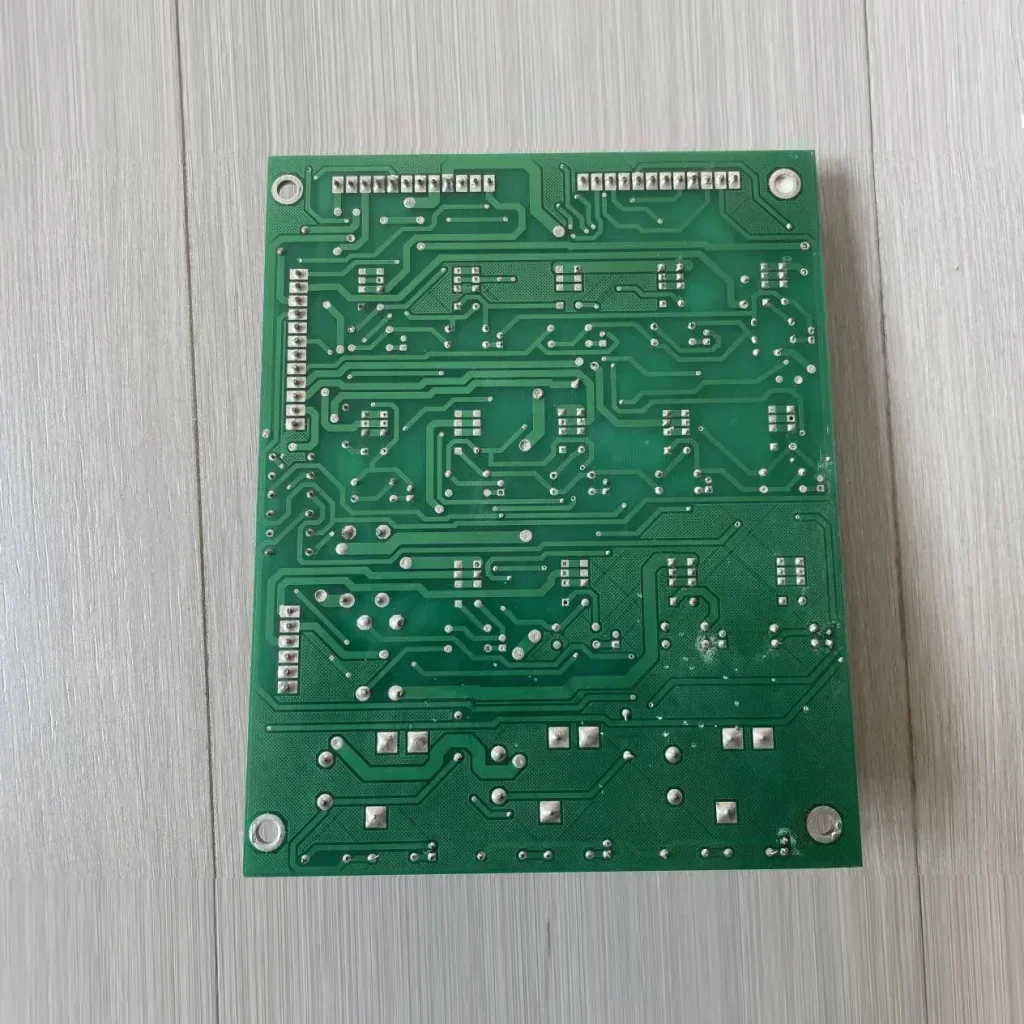 Zoomlion Original Power Control Board – ...
🔹 Core Functions Multi-circuit Power Distrib...
-
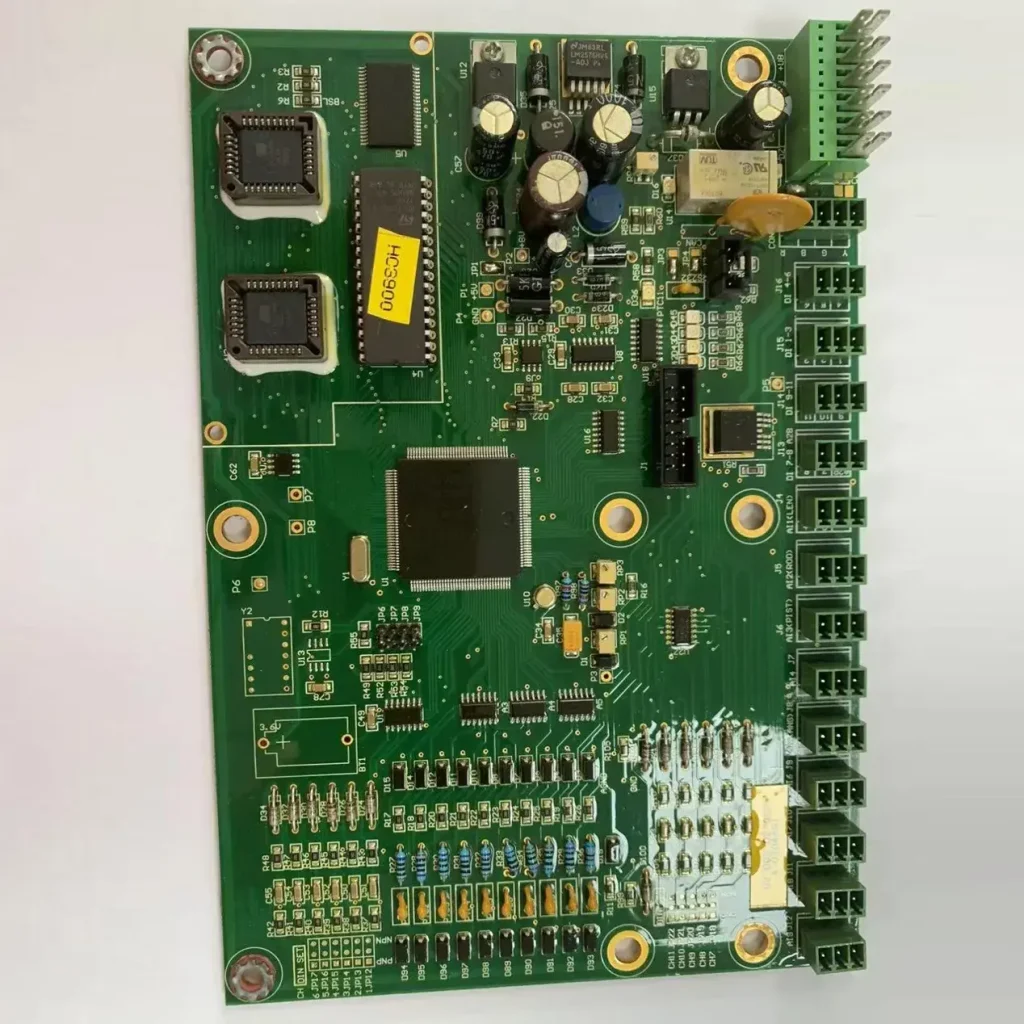 XCMG HC3900 Crane Upper Computer Mainboard
Key Selling Points OEM Direct Compatibility...
-
 Zoomlion Mobile Crane Load Moment Indicator (LM...
Product Overview This is an original equipment...