+86 18652221058
- Chinese
- French
- German
- Portuguese
- Spanish
- Russian
- Japanese
- Korean
- Arabic
- Irish
- Greek
- Turkish
- Italian
- Danish
- Romanian
- Indonesian
- Czech
- Afrikaans
- Swedish
- Polish
- Basque
- Catalan
- Esperanto
- Hindi
- Lao
- Albanian
- Amharic
- Armenian
- Azerbaijani
- Belarusian
- Bengali
- Bosnian
- Bulgarian
- Cebuano
- Chichewa
- Corsican
- Croatian
- Dutch
- Estonian
- Filipino
- Finnish
- Frisian
- Galician
- Georgian
- Gujarati
- Haitian
- Hausa
- Hawaiian
- Hebrew
- Hmong
- Hungarian
- Icelandic
- Igbo
- Javanese
- Kannada
- Kazakh
- Khmer
- Kurdish
- Kyrgyz
- Latin
- Latvian
- Lithuanian
- Luxembou..
- Macedonian
- Malagasy
- Malay
- Malayalam
- Maltese
- Maori
- Marathi
- Mongolian
- Burmese
- Nepali
- Norwegian
- Pashto
- Persian
- Punjabi
- Serbian
- Sesotho
- Sinhala
- Slovak
- Slovenian
- Somali
- Samoan
- Scots Gaelic
- Shona
- Sindhi
- Sundanese
- Swahili
- Tajik
- Tamil
- Telugu
- Thai
- Ukrainian
- Urdu
- Uzbek
- Vietnamese
- Welsh
- Xhosa
- Yiddish
- Yoruba
- Zulu
- Kinyarwanda
- Tatar
- Oriya
- Turkmen
- Uyghur

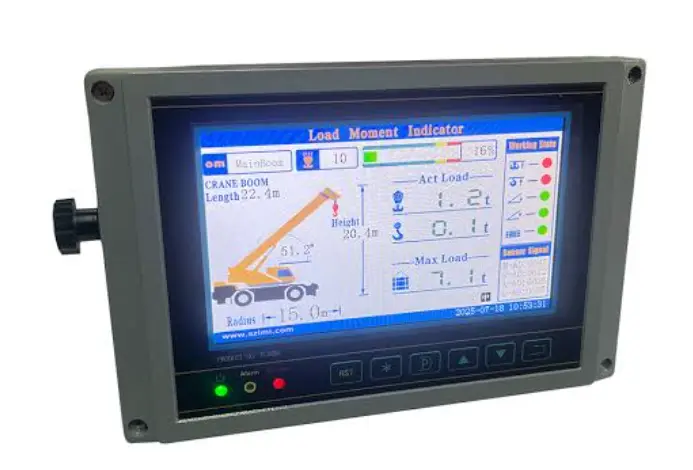
What Is A Load Moment Indicator On A Crane? | Xuzhou Jiemanda Construction Machinery Co . , Ltd.
A load moment indicator (LMI) is a safety monitoring system that helps a crane operator understand whether the crane is operating within its permitted lifting capacity. It continuously evaluates the relationship between the load, boom angle or length, working radius, crane configuration, and rated capacity.
On a mobile crane, lifting capacity changes as the boom extends or the load moves farther from the crane’s center of rotation. A Mobile Crane Load Moment Indicator gives the operator real-time information about this changing condition, helping them make safer decisions before and during a lift.
What does “load moment” mean?
In crane operations, “load moment” describes the turning effect created by a load at a given distance from the crane’s tipping axis. It is commonly understood as:
Load Moment = Load Weight × Working Radius
For example, a load may be within the crane’s rated capacity when lifted close to the crane. However, as the boom is extended and the working radius increases, the same load can create a much higher overturning force. This is why a crane cannot be judged by hook capacity alone.
The load chart remains the primary reference for permitted lifting capacities. An LMI helps the operator compare actual operating conditions with the selected crane configuration and rated capacity.
How does a Mobile Crane Load Moment Indicator work?
A Mobile Crane Load Moment Indicator uses sensors and an onboard control system to collect operating data. Depending on the crane model and system design, it may monitor:
- Boom length
- Boom angle
- Working radius
- Hoist line load
- Outrigger position
- Counterweight configuration
- Jib or attachment selection
- Parts of line
- Rated capacity for the current configuration
The system processes this information and displays it in the operator’s cab. It may show the actual load, allowed capacity, radius, percentage of capacity used, and warning messages.
When the crane approaches its configured limit, the LMI can provide visual and audible alerts. Some systems also include limiting functions that restrict certain crane movements when an overload condition is imminent. The exact functions depend on the crane manufacturer, model, configuration, and local safety requirements.
Why is an LMI important on a crane?
A load moment indicator helps operators manage one of the most important risks in lifting: exceeding the crane’s rated capacity at a particular radius and configuration.
Its value includes:
Better real-time lifting awareness
Conditions can change quickly during telescoping, luffing, slewing, or repositioning. The LMI gives the operator immediate information instead of relying only on estimates.
Support for safer lift planning
Before a lift begins, the team should confirm load weight, rigging weight, lifting radius, boom length, ground conditions, and crane configuration. During the lift, the LMI helps confirm that the crane remains within the selected operating limits.
Reduced risk of overload
An overload may lead to instability, structural stress, boom damage, or a dangerous lifting incident. Warning systems help the operator recognize when the crane is approaching a limit before the condition becomes critical.
Improved efficiency for mobile crane operations
Mobile cranes are often used in changing work areas, with different radii, outrigger arrangements, attachments, and lift requirements. A properly functioning LMI helps operators adapt to these changes with clearer operating information.
Is a load moment indicator the same as a load chart?
No. They work together, but they are not the same.
A load chart is the crane manufacturer’s capacity reference. It shows the maximum permitted load for specific configurations, including boom length, radius, counterweight, outrigger setup, and attachment condition.
A Mobile Crane Load Moment Indicator is an electronic monitoring aid. It uses live crane data to help the operator understand the current condition relative to the applicable capacity.
Operators should never treat an LMI as a replacement for the correct load chart, lift plan, qualified rigging personnel, daily inspections, or manufacturer operating instructions.
What can affect LMI accuracy?
An LMI is only as reliable as its installation, calibration, sensor condition, and configuration input. Common factors that can affect the displayed information include:
- Incorrect crane configuration selection
- Improper outrigger setup
- Damaged, worn, or uncalibrated sensors
- Incorrect hook block, rigging, or attachment data
- Changes in load radius during lifting
- Dynamic loading caused by sudden movement or wind
- Uneven or inadequate ground support
- Unauthorized system modification or bypassing
For this reason, operators should complete required inspections, verify system status before lifting, and follow the crane manufacturer’s calibration and maintenance procedures.
Can an LMI make every lift safe?
No. An LMI is an important operational aid, but it cannot replace professional judgment or safe lifting practice.
It does not independently assess every site risk. For example, the system may not determine whether the ground has adequate bearing capacity, whether rigging is correctly selected, whether a suspended load may strike an obstruction, or whether wind conditions are suitable for the planned lift.
Safe operation still requires a trained operator, accurate load information, the correct load chart, suitable ground conditions, proper rigging, clear communication, and compliance with applicable regulations and manufacturer instructions.
How should an LMI be checked and maintained?
A practical LMI maintenance routine should include:
- Confirming the system powers up correctly before operation
- Checking for warning messages, sensor faults, or damaged cables
- Verifying that the displayed crane configuration matches the actual setup
- Confirming the correct hook block, jib, counterweight, and outrigger condition are selected
- Following manufacturer calibration intervals
- Removing the crane from normal operation when a critical safety system malfunction is identified, unless approved alternative procedures apply
- Recording inspections, repairs, and recalibration work
Never bypass, disable, or ignore an LMI warning. If the system indicates a fault, the responsible person should follow the crane manufacturer’s instructions and the site’s lifting safety procedure.
Choosing a mobile crane with a reliable LMI system
When evaluating a mobile crane, buyers should look beyond the display screen. Ask whether the system supports the crane’s intended configurations, attachments, lifting duties, and service environment.
Key questions include:
- Does the system clearly display rated capacity, actual load, and working radius?
- Can it recognize relevant boom, jib, outrigger, and counterweight configurations?
- Are warning and limiting functions appropriate for the intended work?
- Is calibration and technical support available?
- Can operators easily understand the screen and alarms?
- Does the crane documentation clearly explain LMI operation and troubleshooting?
A well-matched crane and properly maintained LMI system can support safer, more controlled lifting across construction, logistics, infrastructure, plant maintenance, and industrial projects.
FAQ
What is the difference between an LMI and a rated capacity indicator?
The terms are often used closely. A load moment indicator focuses on the relationship between load and radius, while a rated capacity indicator provides information about the permitted capacity in the crane’s current operating condition. Terminology may vary by manufacturer and region.
Does a load moment indicator measure the weight of the load?
Many systems can display estimated or measured hook load, but their main purpose is to evaluate load and radius against the crane’s configured capacity. The lift team should still verify the total lifted weight, including rigging, hook block, lifting devices, and attachments.
Does every mobile crane need an LMI?
Requirements vary by crane type, capacity, country, application, and regulation. However, cranes with variable capacity based on radius or configuration commonly use a rated capacity or load moment monitoring system to support safe operation.
Conclusion
A load moment indicator is a critical crane safety aid that helps operators monitor the relationship between load, radius, and rated capacity in real time. For a mobile crane, it supports safer decisions as boom length, working radius, and configuration change.
The best results come from combining a reliable Mobile Crane Load Moment Indicator with accurate lift planning, correct load-chart use, trained personnel, inspections, sound ground preparation, and disciplined operating procedures.
For mobile crane solutions and professional project support, please contact our team: https://www.xzjmd.com/contact-us/
Feature Product
-
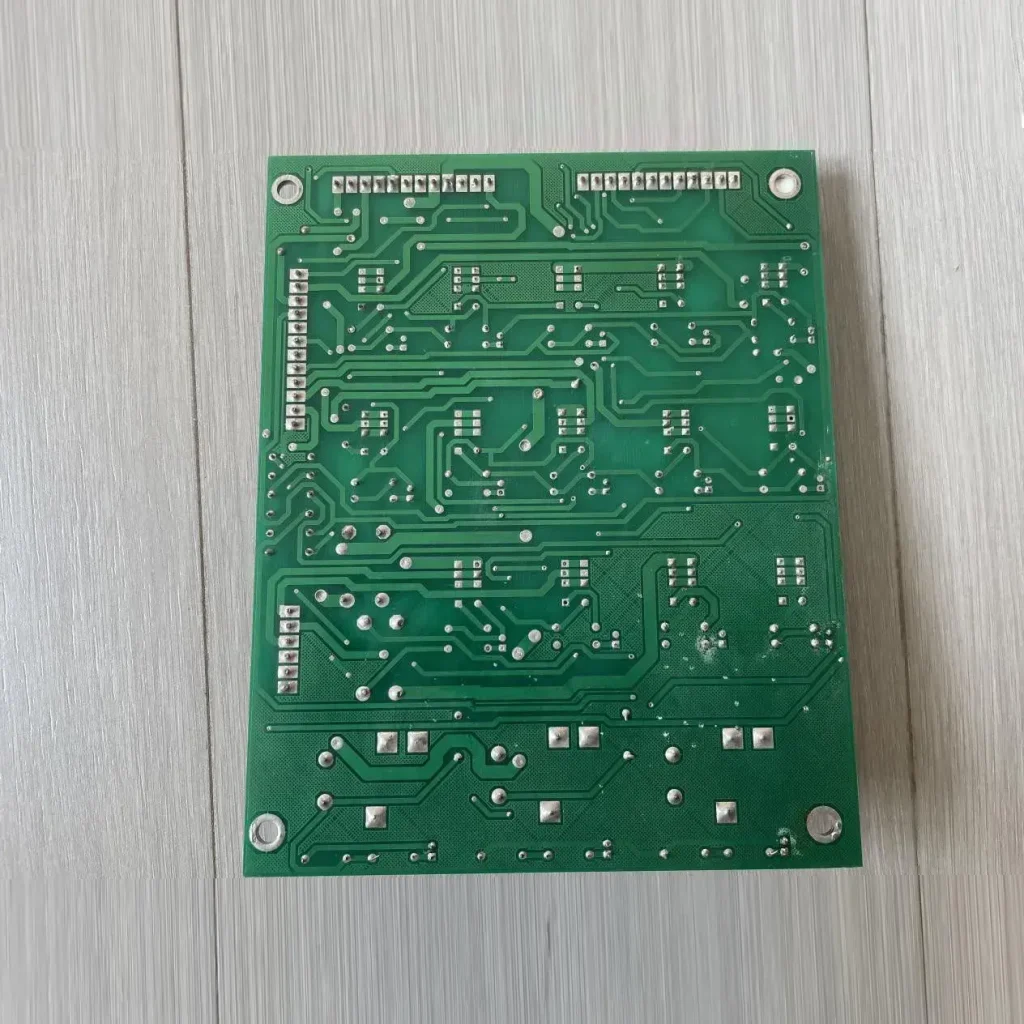 Zoomlion Original Power Control Board – ...
🔹 Core Functions Multi-circuit Power Distrib...
-
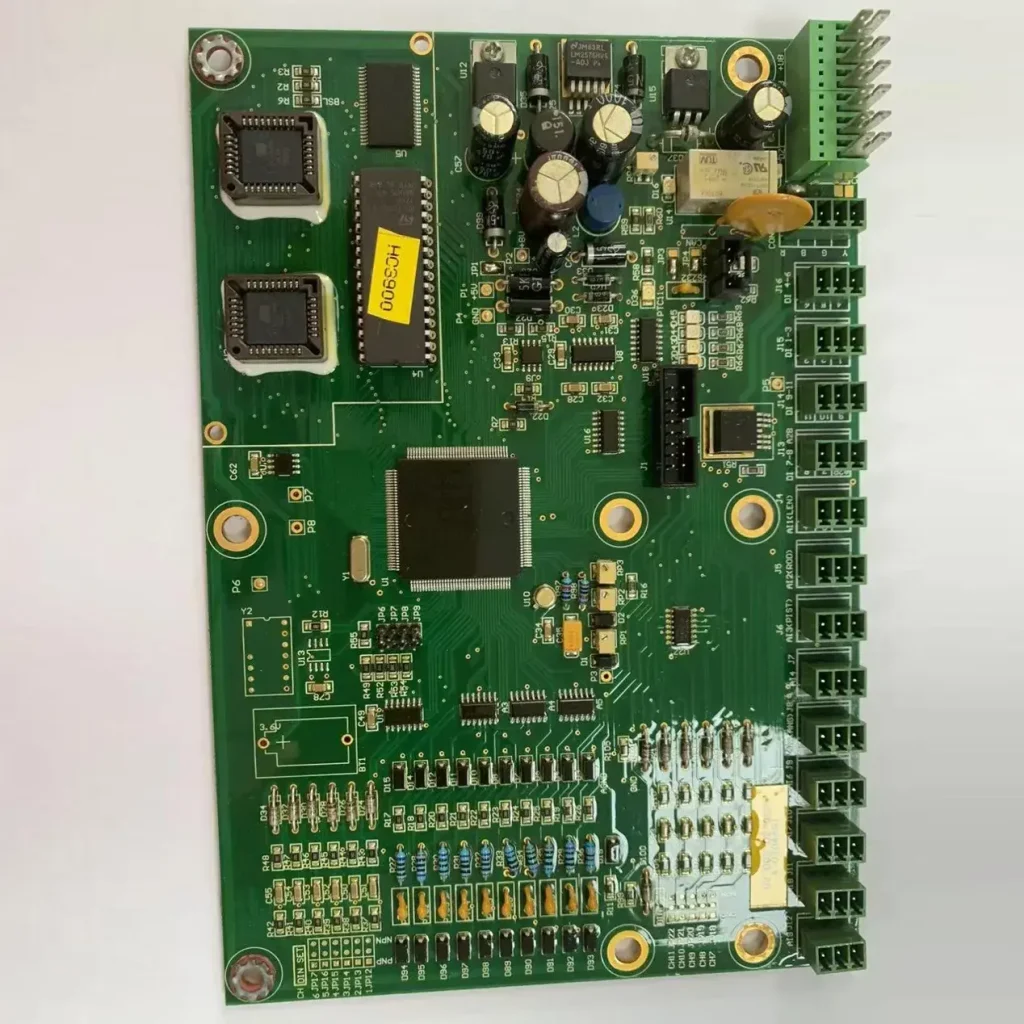 XCMG HC3900 Crane Upper Computer Mainboard
Key Selling Points OEM Direct Compatibility...
-
 Zoomlion Mobile Crane Load Moment Indicator (LM...
Product Overview This is an original equipment...