
+86 18652221058
- Chinese
- French
- German
- Portuguese
- Spanish
- Russian
- Japanese
- Korean
- Arabic
- Irish
- Greek
- Turkish
- Italian
- Danish
- Romanian
- Indonesian
- Czech
- Afrikaans
- Swedish
- Polish
- Basque
- Catalan
- Esperanto
- Hindi
- Lao
- Albanian
- Amharic
- Armenian
- Azerbaijani
- Belarusian
- Bengali
- Bosnian
- Bulgarian
- Cebuano
- Chichewa
- Corsican
- Croatian
- Dutch
- Estonian
- Filipino
- Finnish
- Frisian
- Galician
- Georgian
- Gujarati
- Haitian
- Hausa
- Hawaiian
- Hebrew
- Hmong
- Hungarian
- Icelandic
- Igbo
- Javanese
- Kannada
- Kazakh
- Khmer
- Kurdish
- Kyrgyz
- Latin
- Latvian
- Lithuanian
- Luxembou..
- Macedonian
- Malagasy
- Malay
- Malayalam
- Maltese
- Maori
- Marathi
- Mongolian
- Burmese
- Nepali
- Norwegian
- Pashto
- Persian
- Punjabi
- Serbian
- Sesotho
- Sinhala
- Slovak
- Slovenian
- Somali
- Samoan
- Scots Gaelic
- Shona
- Sindhi
- Sundanese
- Swahili
- Tajik
- Tamil
- Telugu
- Thai
- Ukrainian
- Urdu
- Uzbek
- Vietnamese
- Welsh
- Xhosa
- Yiddish
- Yoruba
- Zulu
- Kinyarwanda
- Tatar
- Oriya
- Turkmen
- Uyghur

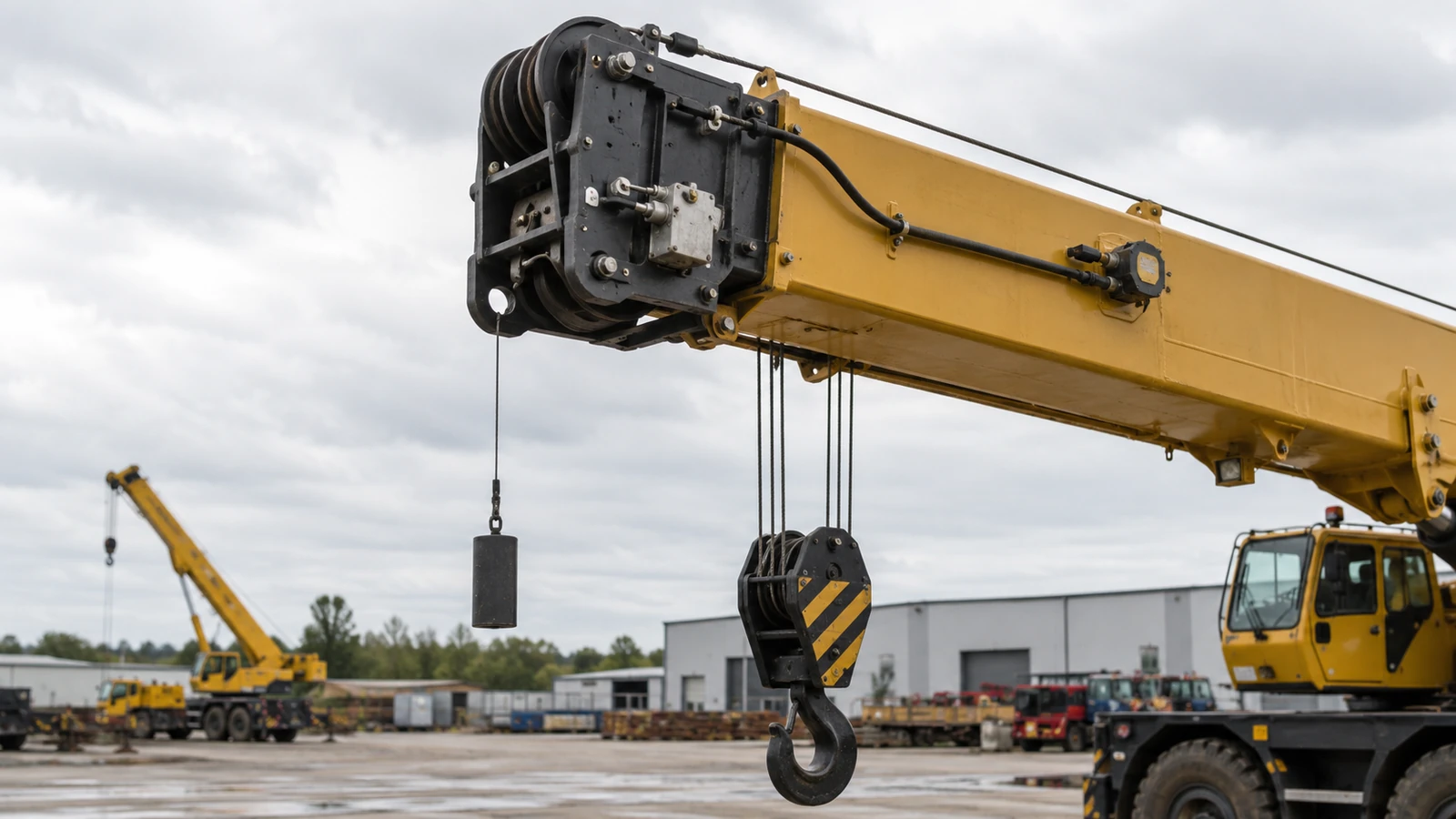
Before replacing a crane anti-two-block switch, buyers should verify the crane identity, original part number, mounting arrangement, trigger or weight configuration, cable route, connector, pin assignment, electrical interface and connection to the hoisting control system. A visually similar switch is not automatically compatible. The replacement must fit the crane mechanically, reproduce the intended trigger behavior and communicate correctly with the existing safety-control circuit. Buyers should therefore send the crane brand, model and serial information together with the original nameplate, connector, mounting and installation photographs. They should also define the required documentation and post-installation acceptance process. The safest procurement principle is simple: treat the switch, mounting, trigger mechanism, wiring and crane controller as one interface—not as independent parts.
What Does an Anti-Two-Block Switch Actually Need to Match?
An anti-two-block device is intended to detect an unsafe approach between the hook block or overhaul ball and the boom-tip area, then provide a signal to the crane’s warning or motion-control system. The exact architecture varies by crane. A system may use a mechanically actuated switch, a suspended weight and cable arrangement, dedicated wiring and a specific controller input. The replacement decision must therefore go beyond the generic label “crane limit switch.”
Buyers should evaluate five linked layers: the crane application, the physical mounting, the trigger geometry, the electrical definition and the required system response. If any layer differs from the original design, the part may mount but still fail to reproduce the intended protection function. The construction machinery limit switch range can help buyers identify the relevant product family, but it does not replace model-specific compatibility confirmation.
Start With the Original Part and Crane Identification
The original component is usually the strongest starting point for replacement identification. A buyer should record the crane manufacturer, full model, serial number or production batch when available, original switch part number, nameplate information and any revision marking. This information helps separate parts that share a housing style but belong to different control arrangements.
Photographs should show more than the front of the switch. Useful evidence includes the complete installed position, mounting bracket, fasteners, suspended weight or trigger assembly, cable exit, connector face, wire markings and the surrounding boom-tip geometry. A scale reference can help with dimensions, but critical dimensions should still be measured and stated separately.
When the original part number is missing or unreadable, buyers should not ask a supplier to identify the replacement from one product photograph alone. The supplier needs enough evidence to compare the complete interface and should clearly return what is confirmed, what is assumed and what still requires buyer input.
How Should Mounting and Trigger Geometry Be Compared?
Mechanical fit is not limited to bolt-hole spacing. Buyers should compare the mounting orientation, bracket shape, switch-body envelope, cable direction, actuation point and available clearance through the crane’s operating range. The suspended trigger weight, chain or cable arrangement must also be identified because it determines how movement at the hook-block area reaches the switch.
A replacement mounted at a different angle or distance may change when the device actuates. A cable routed across an edge may also introduce wear or restrict movement. For this reason, the RFQ should include dimensions and several installation views rather than a single nominal measurement.
The buyer should ask whether the offered item includes only the switch or also the bracket, trigger weight, cable, connector or other accessories. “Complete assembly” can mean different things to different suppliers. An itemized supply scope prevents a compatible switch body from arriving without the parts required for installation.
Why Is Electrical Compatibility More Than Connector Shape?
A matching connector shell does not prove electrical compatibility. The number of contacts, pin allocation, contact logic, supply or control-circuit definition, cable length and connection to the crane controller must all be checked. Two connectors can mate physically while carrying different signals on the same pin positions.
The buyer should provide the original wiring diagram or an authorized extract where possible. If that is unavailable, the original wire colors and pin positions may support identification, but they should not be treated as a substitute for an approved electrical definition. The supplier should identify whether its confirmation is based on an exact part-number match, verified documentation or a proposed alternative requiring engineering review.
Because this device participates in a safety-related crane function, installation and testing should follow the crane manufacturer’s instructions, the project’s safety procedure and applicable local requirements. The circuit must never be bypassed or temporarily jumpered as a procurement shortcut.
Which Anti-Two-Block Interfaces Should Buyers Freeze Before Ordering?
| Buyer Input | Supplier Confirmation | Risk if Unclear | Evidence |
| Crane brand, model and serial | Applicable crane identification | Wrong product variant | Nameplate and crane records |
| Original part number and revision | Exact match or approved alternative | Uncontrolled substitution | Part label and quotation |
| Mounting and orientation | Bracket, holes and body envelope | Part cannot be installed correctly | Drawing, dimensions and photos |
| Trigger and weight arrangement | Actuation method and included scope | Incorrect trigger behavior | Assembly photo or diagram |
| Cable and connector | Length, connector type and mating side | Routing or interface mismatch | Connector-face photo and specification |
| Pinout and circuit definition | Pin allocation and contact behavior | False signal or no protective response | Approved wiring information |
| Controller response | Intended system interface | Device does not integrate with crane logic | Crane documentation |
| Acceptance requirement | Test and document scope | No objective release basis | Inspection and functional record |
Freezing these interfaces does not mean the buyer must redesign the protection system. It means the quotation and purchase order should preserve the original engineering definition, identify deviations and prevent a visually similar alternative from entering production without review.
What Can Go Wrong With a Visually Similar Replacement?
The switch fits the bracket but actuates at the wrong point
A similar housing may have a different actuator position, movement or mounting orientation. The device can appear installed correctly while the trigger geometry no longer corresponds to the original system.
The connector mates but the pin assignment differs
Physical connection can conceal an electrical mismatch. The result may be a permanent alarm, no alarm, an incorrect control input or unpredictable behavior during operation.
The supply scope omits the correct trigger hardware
A switch without the required weight, chain, cable or bracket may lead to improvised field arrangements. Buyers should define every included item before approving the quotation.
The replacement is accepted without a controlled functional test
Appearance and continuity checks alone do not demonstrate that the crane produces the intended warning and motion response. A qualified person must perform the prescribed functional verification under controlled conditions.
How Should Buyers Evaluate the XCMG XESA2B-CL15M?
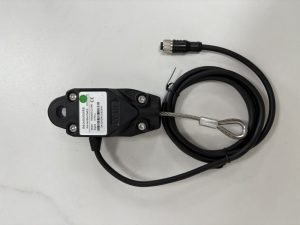
The XCMG XESA2B-CL15M anti-two-block component provides a specific product reference for evaluation. Its page describes a weight-sensing arrangement intended to detect hook position and interrupt the hoisting power circuit when the preset condition is reached. That description establishes the product’s intended family and function; it does not prove compatibility with every XCMG crane or every anti-overwinding installation.
A buyer should still compare the exact crane model, original part number, mounting, trigger assembly, cable, connector, wiring and controller interface. If the supplied page, label or photographs do not resolve one of these points, the quotation should mark it as requiring review. Any offered alternative should list the changed interface and the evidence supporting the substitution.
What Should Be Checked After Installation?
Post-installation checks should be planned before the order is released. A qualified technician should first verify secure mounting, correct orientation, cable protection, connector retention and the absence of interference throughout the permitted mechanism movement. The trigger or weight arrangement should match the approved installation definition.
Functional verification must then follow the crane manufacturer’s procedure and the site’s controlled safety plan. The test should confirm the intended trigger, signal, alarm and control response without creating a two-block condition. The result, tester or responsible person, crane identification and any corrective action should be recorded according to the buyer’s acceptance requirements. If the expected response is not obtained, the crane should remain out of service until the cause is resolved by authorized personnel.
What Should a Crane Anti-Two-Block Switch RFQ Include?
- Crane manufacturer, model, serial number and production year or batch.
- Original anti-two-block switch part number and revision.
- Clear photographs of the label, installed switch and boom-tip location.
- Mounting-hole pattern, orientation and available installation envelope.
- Trigger weight, chain, cable and actuation arrangement.
- Cable length, routing requirements and environmental exposure.
- Connector manufacturer or type, keying and mating-side photographs.
- Approved pinout, contact logic and circuit/interface information.
- Required accessories and an itemized supply scope.
- Required drawings, inspection records and traceability documents.
- Sample, installation review and functional acceptance requirements.
- Quantity, destination, packing and requested delivery schedule.
Ask the supplier to return each critical item as Confirmed, Deviation, Alternative or Buyer Input Required. This makes quotations comparable and exposes unresolved compatibility questions before the switch reaches the crane.
Frequently Asked Questions
Can buyers replace an anti-two-block switch by matching its appearance?
No. Appearance does not confirm the part number, mounting geometry, trigger arrangement, connector pinout, contact behavior or controller compatibility.
Is a matching connector enough to confirm compatibility?
No. The connector shell, pin allocation, wiring and circuit definition must all match the approved crane interface.
What information is most useful when the original label is damaged?
Provide the crane model and serial information, several installation photographs, measured mounting dimensions, connector-face images, wire identification and the authorized wiring or parts documentation available for that crane.
Can the crane return to service immediately after the switch is installed?
Only after installation and the intended safety response have been verified by qualified personnel under the manufacturer’s procedure, site controls and applicable requirements.
Turn Compatibility Evidence Into a Clear Purchase Decision
A reliable replacement decision connects the original crane record to the mechanical, trigger and electrical interfaces, then closes the loop with controlled functional verification. Buyers can submit the crane model, original part number, photos, mounting data, wiring information, required accessories, quantity and acceptance scope through the Jiemanda replacement-parts inquiry form. Request written identification of every confirmed point and every deviation before approving a sample or purchase order.
Feature Product
-
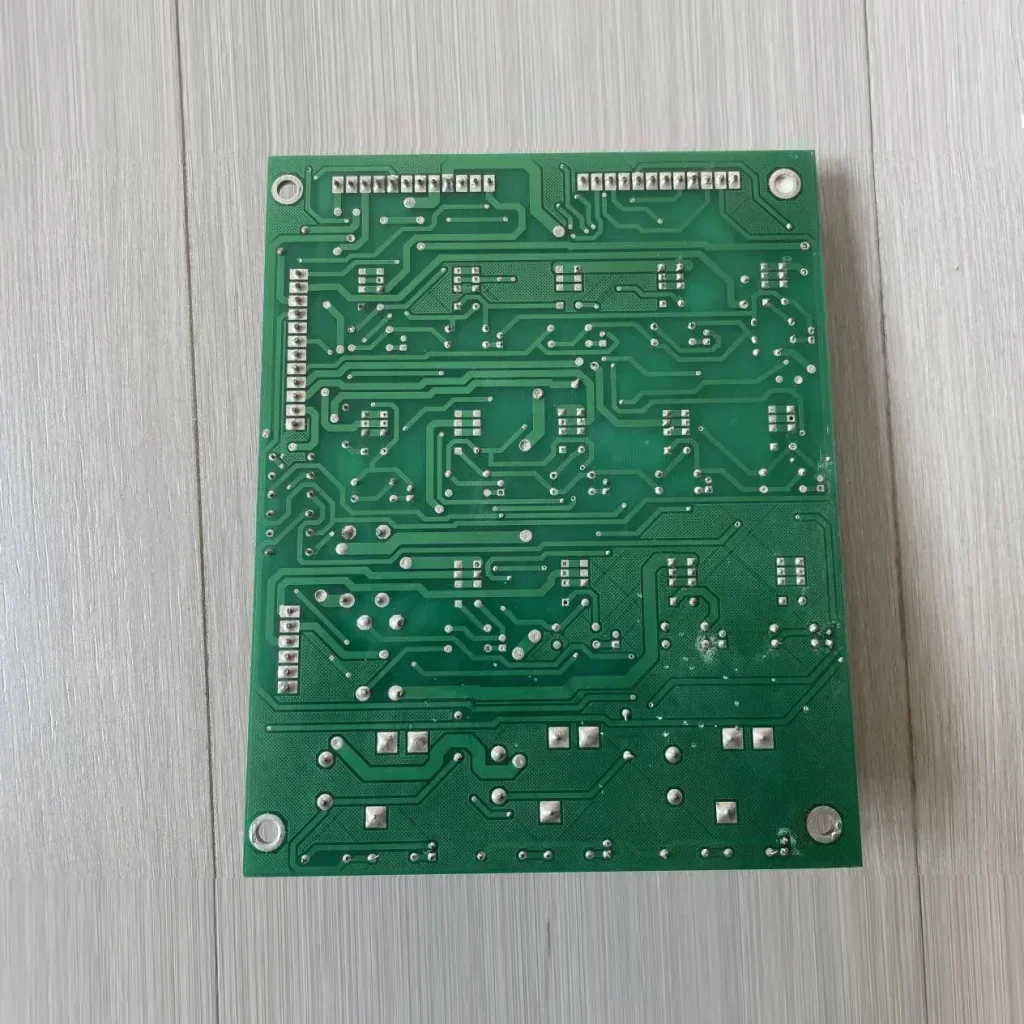 Zoomlion Original Power Control Board – ...
🔹 Core Functions Multi-circuit Power Distrib...
-
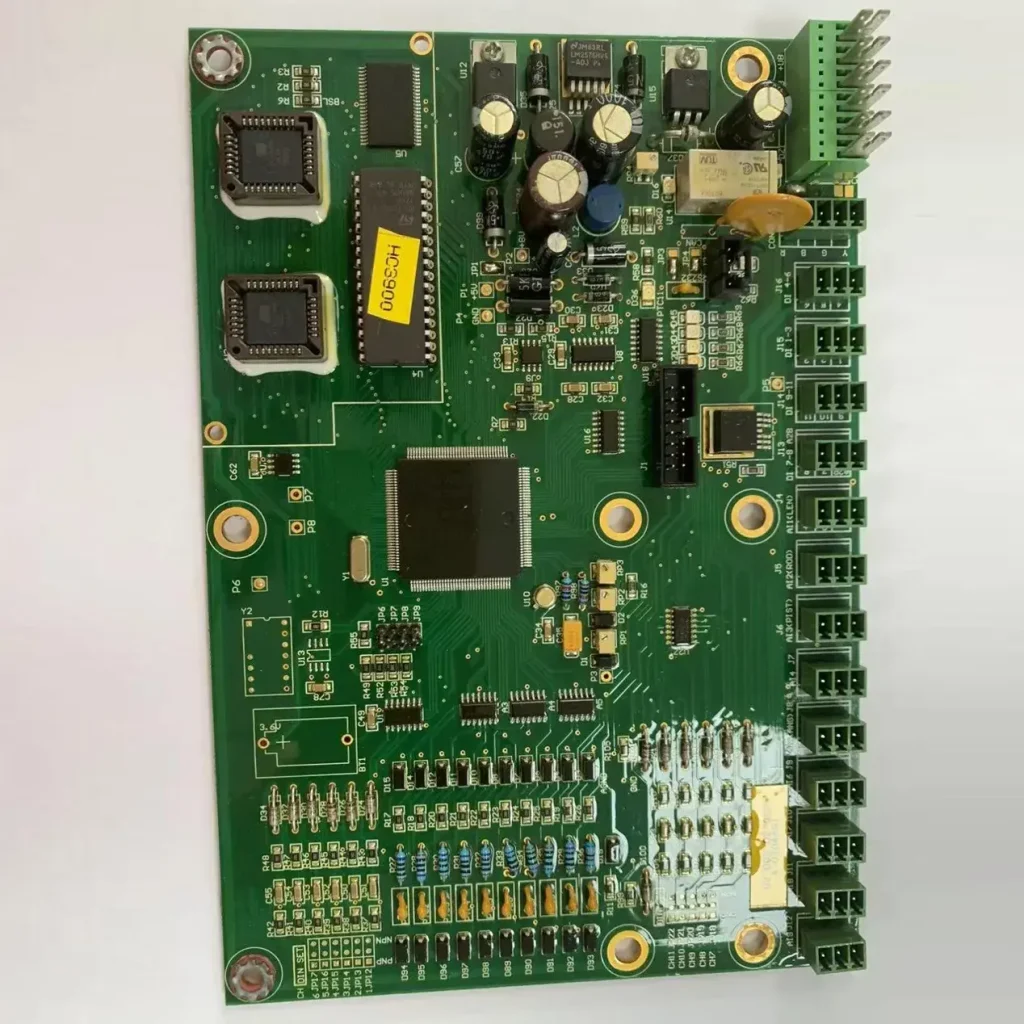 XCMG HC3900 Crane Upper Computer Mainboard
Key Selling Points OEM Direct Compatibility...
-
 Zoomlion Mobile Crane Load Moment Indicator (LM...
Product Overview This is an original equipment...