
+86 18652221058
- English
- Chinese
- French
- German
- Portuguese
- Spanish
- Russian
- Japanese
- Korean
- Arabic
- Irish
- Greek
- Turkish
- Italian
- Danish
- Romanian
- Indonesian
- Czech
- Afrikaans
- Swedish
- Polish
- Catalan
- Esperanto
- Hindi
- Lao
- Albanian
- Amharic
- Armenian
- Azerbaijani
- Belarusian
- Bengali
- Bosnian
- Bulgarian
- Cebuano
- Chichewa
- Corsican
- Croatian
- Dutch
- Estonian
- Filipino
- Finnish
- Frisian
- Galician
- Georgian
- Gujarati
- Haitian
- Hausa
- Hawaiian
- Hebrew
- Hmong
- Hungarian
- Icelandic
- Igbo
- Javanese
- Kannada
- Kazakh
- Khmer
- Kurdish
- Kyrgyz
- Latin
- Latvian
- Lithuanian
- Luxembou..
- Macedonian
- Malagasy
- Malay
- Malayalam
- Maltese
- Maori
- Marathi
- Mongolian
- Burmese
- Nepali
- Norwegian
- Pashto
- Persian
- Punjabi
- Serbian
- Sesotho
- Sinhala
- Slovak
- Slovenian
- Somali
- Samoan
- Scots Gaelic
- Shona
- Sindhi
- Sundanese
- Swahili
- Tajik
- Tamil
- Telugu
- Thai
- Ukrainian
- Urdu
- Uzbek
- Vietnamese
- Welsh
- Xhosa
- Yiddish
- Yoruba
- Zulu
- Kinyarwanda
- Tatar
- Oriya
- Turkmen
- Uyghur


Direct Answer: Unstable engine speed does not automatically mean the electronic accelerator pedal is defective. The fault can come from an unstable pedal-position signal, supply or ground problems, connector or harness faults, poor mechanical return, disagreement between redundant signal channels, or a replacement pedal that does not match the machine’s ECU input requirements. Diagnose the complete signal path before ordering another pedal.
This troubleshooting guide is intended for construction machinery parts distributors, repair companies, equipment rental fleets, workshops, and aftermarket buyers dealing with loaders, excavators, cranes, forklifts, agricultural equipment, and other electronically controlled machines. Jiemanda supplies accelerator pedals and other construction machinery electrical parts for aftermarket replacement projects. Buyers can review the Accelerator Pedal product category, but a replacement should be approved from machine and electrical-interface evidence rather than pedal appearance alone.
What Symptoms Suggest an Accelerator Pedal Signal Problem?
An electronic accelerator pedal converts pedal movement into an electrical command for the engine or motor control system. When that command becomes unstable, incomplete, or implausible, the machine may respond differently depending on its controller logic.
| Observed Symptom | First Diagnostic Direction | Why It Matters |
|---|---|---|
| Engine speed rises and falls while the pedal position appears steady | Pedal signal stability, connector, harness, supply and ground | An unstable electrical input can be interpreted as repeated pedal movement. |
| No throttle response | Supply, ground, signal output, connector, ECU input and machine protection logic | A complete loss of one part of the signal path may prevent the ECU from accepting the command. |
| Throttle works intermittently | Connector retention, harness movement, moisture, vibration-related wiring fault | An intermittent circuit can pass a static inspection but fail while the machine moves. |
| Reduced-power or fallback operation | Redundant-channel plausibility and controller fault information | Some electronic control systems reject pedal input when independent signal channels disagree. |
| New pedal installs correctly but engine response is abnormal | Signal type, output relationship, supply requirement, connector pin assignment and ECU compatibility | Physical fit does not prove electrical equivalence. |
| Pedal does not return smoothly | Mechanical return, hinge, obstruction, mounting distortion and pedal condition | A mechanical problem can create an abnormal electrical command even when the sensor itself is functional. |
A common maintenance mistake is replacing the accelerator pedal immediately because engine speed is unstable. That can solve the problem when the internal sensor is faulty, but it wastes time and parts when the real cause is a harness, connector, power supply, controller input, or replacement mismatch.
How Does a Hall-Effect Electronic Accelerator Pedal Control Engine Speed?
Many modern construction machinery accelerator pedals use non-contact Hall-effect sensing. Pedal travel changes the sensor output, and the vehicle controller interprets that signal as a request for engine speed, motor power, or another commanded output.
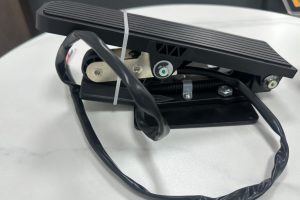
Jiemanda’s current accelerator-pedal range includes models based on Hall-effect sensing. The YL06ECB-11 Electronic Accelerator Pedal Assembly, for example, is listed for construction machinery, agricultural equipment, and special-purpose vehicles and uses Hall-effect technology to convert pedal travel into an electrical signal. Its product data also identifies IP65 dust/water resistance.
For troubleshooting, the important point is not simply that a Hall sensor is present. The complete vehicle must agree on:
- Supply requirement
- Ground reference
- Signal type
- Expected output relationship across pedal travel
- Connector and pin assignment
- Single- or dual-channel architecture
- Controller plausibility logic
A replacement pedal can therefore be mechanically identical and still send a signal that the ECU does not interpret correctly.
Why Can Dual-Channel Signal Disagreement Cause Unstable or Limited Response?
Some electronic accelerator pedals provide redundant signal channels so the controller can compare two independent outputs. The purpose is not to create twice the throttle command; it is to give the control system a way to judge whether the pedal signal remains plausible.
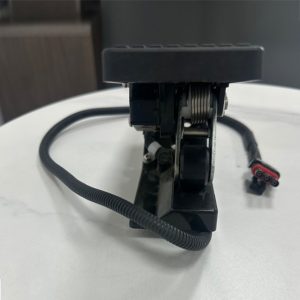
Jiemanda lists the SENTOP BN60FCA Electronic Accelerator Pedal with non-contact Hall sensing, dual redundant signal output, and IP67 protection. This is a useful product example of why a buyer must confirm more than pedal size and connector shape.
| Possible Condition | What the Controller May See | Buyer / Technician Check |
|---|---|---|
| Both channels respond normally | A plausible pedal command | Continue diagnosis elsewhere if engine speed is still unstable. |
| One channel is missing | Incomplete or implausible pedal input | Check the exact wiring, connector, sensor output and controller fault information. |
| Channels move but do not maintain the expected relationship | Plausibility disagreement | Verify the correct pedal model, output characteristics and harness integrity. |
| Replacement pedal uses a different signal relationship | Input outside the ECU’s expected logic | Do not approve the part only because mounting and connector appear compatible. |
One important procurement lesson is that “dual-channel” is not a universal electrical standard. Different pedals can use different output characteristics. The machine’s service information and the proposed pedal specification must be checked together.
How Can Supply Voltage or Ground Problems Mimic a Failed Pedal?
A sensor can only produce a stable signal when its electrical supply and reference are stable. A poor connector, damaged ground, harness resistance, corrosion, loose terminal, or supply fluctuation can change the apparent pedal signal even if the internal Hall sensor is still functional.
Qualified service personnel should diagnose the circuit using the machine manufacturer’s approved wiring information and test procedure. Useful evidence includes:
- Machine model and serial or equipment identification
- Original pedal part number
- Controller or ECU identification
- Fault codes recorded when the problem occurs
- Supply and ground condition under operating load
- Signal behavior through the pedal’s working travel
- Connector pin condition
- Harness condition while vibration or movement is present
A static continuity check alone may not reveal an intermittent fault. Construction machinery works under vibration, dust, moisture, heat, and repeated harness movement. A connection that appears normal while parked can become unstable during operation.
Why Does Connector Condition Matter in Harsh Construction Environments?
Accelerator pedals are installed where dirt, moisture, vibration, operator movement, and repeated service work can affect the connector and harness. Intermittent throttle symptoms should therefore be investigated as a system problem rather than only a sensor problem.
Common evidence includes:
- Loose connector locking mechanism
- Bent, pushed-back, or contaminated terminals
- Harness tension near the pedal
- Wires rubbing on brackets or the cab structure
- Water or corrosion inside the connector
- Previous field repairs or non-original terminals
- Fault occurrence that changes when the harness moves
The hidden cost of ignoring the connector is repeated part replacement. A new pedal may temporarily appear to fix the problem simply because the connector was unplugged and reconnected during installation, only for the same intermittent fault to return later.
Can a Mechanical Pedal Problem Cause an Electrical Throttle Fault?
Yes. An electronic pedal is still a mechanical input device with a hinge, return mechanism, mounting points, and a physical travel path. If the pedal sticks, returns slowly, contacts the floor or trim, or is distorted by incorrect mounting, the sensor can produce a command that accurately reflects the wrong mechanical position.
| Mechanical Check | What to Observe | Potential Effect |
|---|---|---|
| Pedal return | Returns smoothly and consistently when released | A slow or incomplete return can keep the commanded speed above idle. |
| Mounting bracket | No distortion, looseness or incorrect installation angle | Changed geometry can alter the usable travel or sensor relationship. |
| Obstruction | No floor mat, debris, trim or cab component interferes with movement | Pedal travel may be restricted or prevented from returning fully. |
| Hinge condition | No abnormal friction, looseness or damage | Inconsistent physical movement can appear as signal instability. |
| Travel range | Movement corresponds to the machine’s intended pedal range | An incorrect replacement can physically move differently from the original pedal. |
This is why a replacement part should be checked both electrically and mechanically before the machine is returned to normal operation.
Why Can a New Accelerator Pedal Still Produce the Wrong Engine Response?
This is one of the most important aftermarket procurement problems. A replacement pedal can:
- Use the same or similar housing
- Fit the same bracket
- Use a connector from the same family
- Move through a similar physical angle
and still be wrong for the machine.
The difference can be in:
- Supply requirement
- Pin assignment
- Signal range
- Signal direction
- Single versus dual signal
- Relationship between redundant channels
- Connector keying or internal wiring
- Pedal travel versus electrical output
- Controller or ECU compatibility
A buyer should therefore treat the original part number and machine information as the starting point, not the product photograph.
What Information Should Buyers Use to Match a Replacement Pedal?
| Buyer Input | Why the Supplier Needs It |
|---|---|
| Machine brand | Identifies the equipment family and possible control architecture. |
| Exact machine model | Different models can use different pedal and ECU interfaces. |
| Serial / equipment number | Helps distinguish production revisions within one model family. |
| Original pedal part number | Provides the strongest initial replacement reference. |
| Full label photos | Captures suffix, revision, manufacturer and electrical information. |
| Connector photos | Helps verify housing, keying, pin count and harness interface. |
| Mounting photos and dimensions | Confirms bracket arrangement, orientation and physical fit. |
| Known electrical data | Allows comparison of supply and signal requirements. |
| Fault symptoms and fault codes | Helps determine whether the pedal is the likely component or only one part of the signal path. |
For brand-specific sourcing, Jiemanda also maintains an XCMG Accelerator Pedal category. Brand category pages can narrow the search, but final approval should still use the exact machine and original pedal information.
How Should a Workshop Separate Pedal, Harness, and ECU Faults?
A useful diagnostic process asks what evidence changes when each part of the system is isolated. The goal is not to replace the most convenient component first, but to determine where the signal becomes abnormal.
| Evidence | More Consistent With | Next Decision |
|---|---|---|
| Pedal signal is unstable directly at the pedal with stable supply/ground | Pedal sensor or internal pedal problem | Confirm the correct replacement specification. |
| Pedal output is stable but signal at controller becomes unstable | Harness or connector problem | Inspect the signal path before replacing another pedal. |
| Pedal and harness signals are plausible but engine response remains abnormal | Controller, ECU, engine-control, or another machine-system issue | Continue diagnosis using machine-specific controller information. |
| Problem begins immediately after fitting a different pedal model | Compatibility or installation issue | Compare original and replacement electrical/mechanical specifications. |
| Fault changes when pedal or harness is physically moved | Intermittent connector, wiring or mechanical issue | Reproduce the condition safely and inspect the affected area. |
Qualified technicians should follow the machine manufacturer’s service procedures and avoid bypassing pedal plausibility checks, interlocks, or controller protection logic merely to keep the equipment operating.
What Does a Representative Field Failure Look Like?
Scenario: A construction machinery repair company receives a loader with intermittent engine-speed fluctuation. This is a representative aftermarket scenario, not a claimed Jiemanda customer case.
Business Background: The machine operates normally at the start of a shift, but engine speed occasionally drops and rises even when the operator attempts to hold a steady pedal position.
Problem: The first repair decision is to replace the electronic accelerator pedal. A visually similar replacement is installed, but throttle response remains abnormal.
Cause: The original RFQ included only a pedal photo and approximate machine model. The repair team had not confirmed the original part number, controller identity, connector pin assignment, redundant-channel requirements, or whether the harness remained stable during machine vibration.
Solution: The workshop records the exact machine and controller information, photographs the old pedal label and connector, checks the pedal signal path using the approved machine procedure, and compares the replacement specification with the original interface. The actual fault is isolated before a second purchase decision is made.
Buyer Decision Value: The buyer avoids repeated express shipments and unnecessary pedal replacement. Future RFQs are based on machine model, serial information, original part number, connector, electrical interface, and fault evidence rather than appearance alone.
What Hidden Costs Come From Buying the Wrong Electronic Accelerator Pedal?
The part price is often smaller than the cost of a mismatch. For equipment owners and distributors, the larger losses can include:
- Machine downtime while a second replacement is sourced
- Express freight for an urgent replacement
- Technician travel and repeated diagnostic labor
- Return freight for an incorrectly ordered part
- Loss of customer confidence for distributors
- Stocking inventory that cannot be assigned to a verified machine application
- Potential damage caused by incorrect field modifications to make a mismatched part fit
For recurring aftermarket orders, a distributor should build a compatibility record after every successful replacement: machine model, serial range where known, original part number, approved replacement, connector, mounting, electrical notes, and field-verification result.
What Should Be Included in an Accelerator Pedal RFQ?
| RFQ Section | Buyer Should Provide | Supplier Should Confirm |
|---|---|---|
| Machine identity | Brand, model, serial/equipment number, production information where available | Application basis used for matching |
| Original pedal | Part number, full label photos, manufacturer, revision/suffix | Quoted part number and replacement relationship |
| Electrical interface | Known supply, connector, pin count, signal information and controller/ECU | Compatibility and any differences requiring review |
| Mechanical interface | Mounting photos, bolt pattern, pedal orientation and available space | Fit and installation assumptions |
| Fault evidence | Symptoms, fault codes, operating conditions and previous repairs | Any additional information needed before replacement approval |
| Commercial | Sample or batch quantity, forecast, destination, packaging and target delivery | MOQ, lead time, quotation validity, packing, documentation and exclusions |
Frequently Asked Questions
Can a faulty electronic accelerator pedal cause unstable engine speed?
Yes. An unstable pedal-position signal can cause the controller to receive changing throttle demand. However, wiring, connector, supply, ground, controller input, or mechanical pedal problems can create similar symptoms, so the pedal should not be condemned without diagnosis.
Why does the engine speed still fluctuate after the pedal is replaced?
The replacement may not match the original electrical output, or the real fault may be in the connector, harness, supply, ground, ECU, or another engine-control component. Physical fit alone does not prove compatibility.
What is a dual-channel electronic accelerator pedal?
It provides two signal channels that allow the controller to evaluate whether pedal input remains plausible. The exact signal relationship is model-specific and must match the machine’s controller requirements.
Can a bad connector cause intermittent throttle response?
Yes. Loose terminals, corrosion, harness movement, moisture, or poor connector retention can interrupt or distort pedal signals, particularly in high-vibration construction machinery.
Does the same connector mean two accelerator pedals are interchangeable?
No. Identical-looking connectors can use different pin assignments, supply requirements, signal ranges, or redundant-channel relationships. Confirm the complete electrical specification.
What should I photograph before ordering a replacement pedal?
Photograph the complete pedal, label, connector, harness side of the connector, mounting bracket, pedal orientation, and surrounding installation. Also provide the machine model and original part number.
What should a distributor send Jiemanda for a faster quotation?
Send the machine brand/model, serial or equipment number, original pedal part number, label and connector photos, known electrical data, mounting information, fault symptoms, quantity, destination, and delivery requirement.
Request an Electronic Accelerator Pedal Compatibility Review
Prepare the machine brand and model, serial/equipment identification, original accelerator pedal part number, complete label photos, connector and mounting photos, controller or ECU information, known supply and signal details, fault symptoms, sample or batch quantity, destination, and delivery target. Submit them through Jiemanda’s contact and quotation page. The team can review available accelerator-pedal options, identify missing compatibility information, discuss sample or bulk requirements, and prepare a replacement quotation with stated assumptions and exclusions.
Feature Product
-
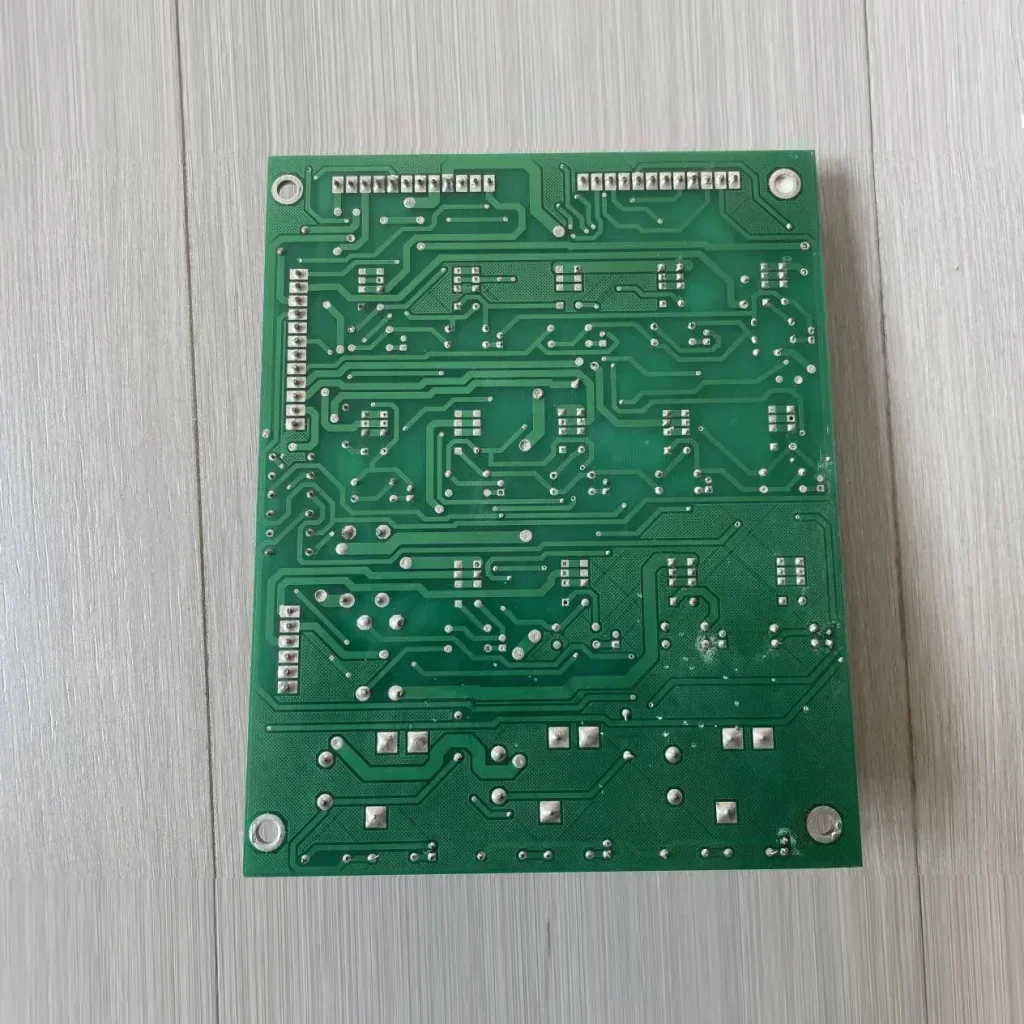 Zoomlion Original Power Control Board – ...
🔹 Core Functions Multi-circuit Power Distrib...
-
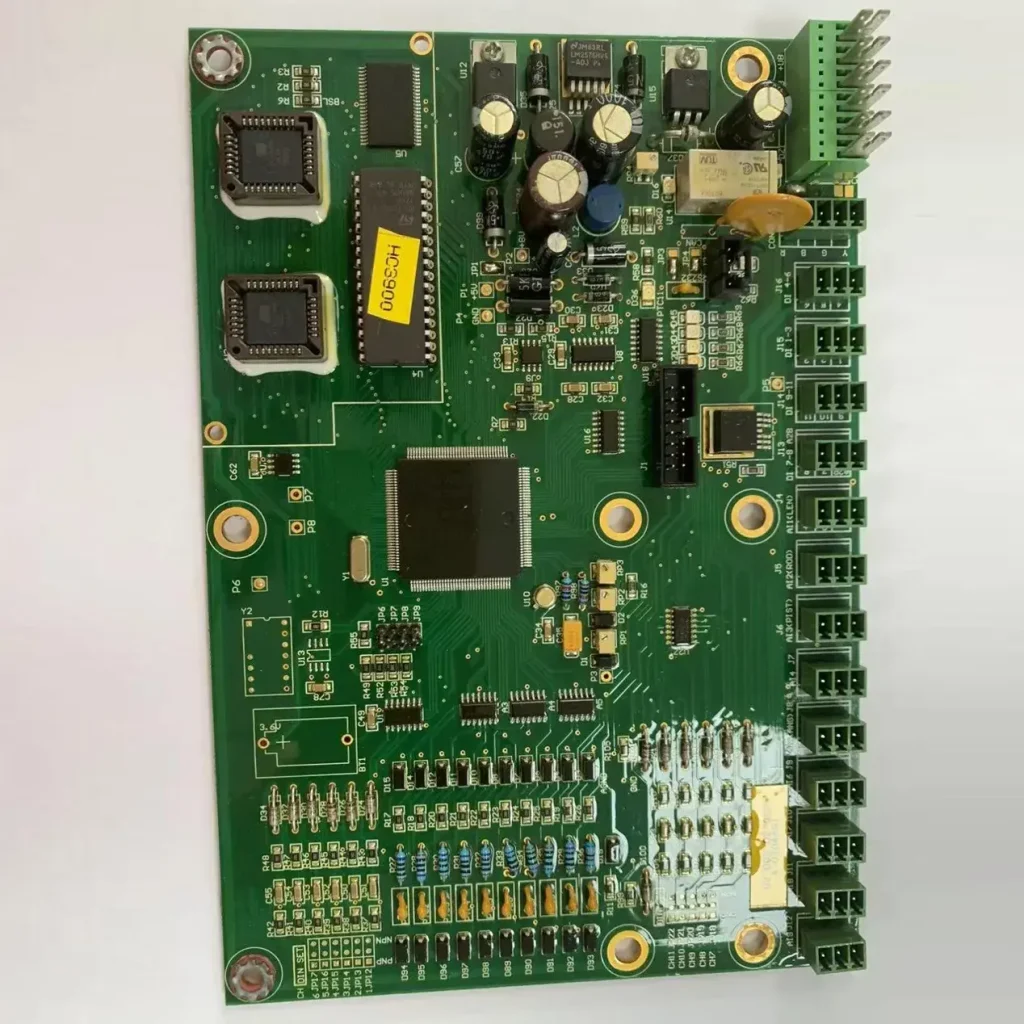 XCMG HC3900 Crane Upper Computer Mainboard
Key Selling Points OEM Direct Compatibility ...
-
 Zoomlion Mobile Crane Load Moment Indicator (LM...
Product Overview This is an original equipment...