+86 18652221058
- English
- Chinese
- French
- German
- Portuguese
- Spanish
- Russian
- Japanese
- Korean
- Arabic
- Irish
- Greek
- Turkish
- Italian
- Danish
- Romanian
- Indonesian
- Czech
- Afrikaans
- Swedish
- Polish
- Catalan
- Esperanto
- Hindi
- Lao
- Albanian
- Amharic
- Armenian
- Azerbaijani
- Belarusian
- Bengali
- Bosnian
- Bulgarian
- Cebuano
- Chichewa
- Corsican
- Croatian
- Dutch
- Estonian
- Filipino
- Finnish
- Frisian
- Galician
- Georgian
- Gujarati
- Haitian
- Hausa
- Hawaiian
- Hebrew
- Hmong
- Hungarian
- Icelandic
- Igbo
- Javanese
- Kannada
- Kazakh
- Khmer
- Kurdish
- Kyrgyz
- Latin
- Latvian
- Lithuanian
- Luxembou..
- Macedonian
- Malagasy
- Malay
- Malayalam
- Maltese
- Maori
- Marathi
- Mongolian
- Burmese
- Nepali
- Norwegian
- Pashto
- Persian
- Punjabi
- Serbian
- Sesotho
- Sinhala
- Slovak
- Slovenian
- Somali
- Samoan
- Scots Gaelic
- Shona
- Sindhi
- Sundanese
- Swahili
- Tajik
- Tamil
- Telugu
- Thai
- Ukrainian
- Urdu
- Uzbek
- Vietnamese
- Welsh
- Xhosa
- Yiddish
- Yoruba
- Zulu
- Kinyarwanda
- Tatar
- Oriya
- Turkmen
- Uyghur

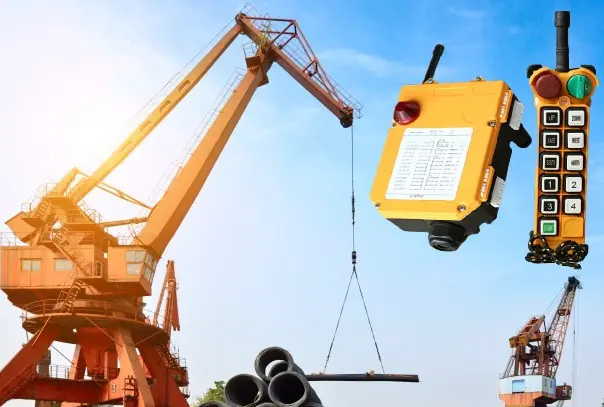
Where Can I Buy A Remote Control Crane? | Xuzhou Jiemanda Construction Machinery Co . , Ltd.
Sep-17-2026
If you have searched for a radio controlled crane for your factory, warehouse or construction site, you already know the hard part: there is no single store that sells them all. A radio controlled crane is a significant piece of industrial equipment, and the right buying route depends on the crane type, the capacity you need, your budget and the regulations in your market.
The good news is that there are three proven routes — buy new from the manufacturer, buy through an equipment dealer, or retrofit an existing crane with a radio control system — and each has clear advantages. This guide explains how each route works, what to check before you buy, and why the electronics behind a remote-operated crane deserve as much attention as the crane itself.
The Short Answer: Three Proven Routes
- Buy new from the crane manufacturer. This is the most direct way to get a crane delivered with an integrated radio remote control system, full warranty and factory certification.
- Buy through an authorized equipment dealer. Dealers offer local sales support, installation, commissioning and after-sales service, and can often finance the purchase.
- Retrofit an existing crane. Many older cranes can be upgraded with a radio control system, which is frequently the fastest and most economical option — especially when the structure and hoist are still in good condition.
Which route is best depends mainly on your timeline, budget and whether you are buying a first crane or modernizing an existing fleet.
Option 1: Buy a New Radio Controlled Crane from the Manufacturer
The cleanest way to buy a radio controlled crane is to order it directly from the crane manufacturer as an option or standard feature. Major crane builders — including XCMG, Zoomlion and Sany, the leading Chinese manufacturers — offer radio remote control on truck cranes, crawler cranes and other models, and factory-installed systems arrive fully integrated, tested and documented.
The advantages are straightforward:
- the remote control system is matched to the crane’s controls and protection systems;
- the crane arrives with complete documentation, certification and warranty;
- the manufacturer takes responsibility for system integration, so you avoid compatibility issues.
The trade-offs are a longer lead time and a higher upfront price than a retrofit. You also become dependent on the manufacturer’s parts and service network — which is exactly why buyers should check spare parts availability and after-sales support before signing.
Option 2: Buy Through an Authorized Dealer
If the manufacturer does not sell directly in your country, an authorized dealer is the usual route. Dealers represent one or more brands, handle import and documentation, and typically provide installation, training and local warranty service. For buyers who need financing, local support or a single point of contact for the whole project, a dealer is often the most practical choice.
The key is to confirm that the dealer is genuinely authorized for the brand and the remote control system, and that after-sales parts supply is guaranteed in writing. A slightly cheaper price from an unauthorized source can quickly become expensive when a control board or LMI computer needs replacement and no genuine part is available.
Option 3: Retrofit an Existing Crane with a Radio Remote Control
You do not always need to buy a new crane to operate it remotely. Overhead cranes, gantry cranes, tower cranes and many mobile cranes can be retrofitted with a radio control system. The upgrade typically consists of a handheld transmitter, an onboard receiver, a controller, and the wiring and safety interfaces to the crane’s existing motions — installed by a qualified integrator and verified by a competent person before use.
Retrofitting is often the most economical route, especially for cranes with many service years left. It is also the reason why the market for radio remote control components and electronic spare parts is so active: every retrofit and every factory system eventually needs transmitters, receivers, joysticks, control boards, sensors and load moment indicator computers.
What to Check Before You Buy a Radio Controlled Crane
Whichever route you choose, work through this checklist before committing:
- Crane type and capacity. Match the crane and its remote system to the loads, duty cycle and working environment — indoor factory floor, outdoor yard, tower site or road transport.
- Safety features. Confirm the system has emergency stop, dead-man controls, fail-safe stop on signal loss, and crane-specific address coding so one transmitter cannot operate another crane.
- Standards compliance. The crane and the remote system should meet the safety standards that apply in your market. ISO 12480-1:2024, the international standard for the safe use of cranes, now includes dedicated requirements for remote operation; in North America, OSHA regulations and the ASME B30 series govern crane safety.
- Radio equipment approval. A radio controlled crane transmits radio signals, and the equipment must comply with local radio regulations — in the United States, industrial radio remote controls normally operate under FCC Part 15 without an individual license, while equipment sold in Europe must comply with the EU Radio Equipment Directive (2014/53/EU) and carry CE marking.
- Spare parts and service. Ask directly: how quickly can you supply a replacement transmitter, receiver, joystick or control board? Where is the nearest service support? This single question separates good suppliers from bad ones.
- Operator training. Remote operation changes how the operator perceives the machine, so budget for training and routine pre-use checks.
- Total cost. Compare the full cost — purchase or retrofit, installation, certification, training, spares and potential downtime — not just the sticker price.
The Electronics Behind the Radio Controlled Crane
Here is what many first-time buyers overlook: a remote-operated crane is an electronic machine, and the components that keep it running are the same ones that wear out — the handheld transmitter, the receiver, joysticks and switches, control boards, wiring, sensors and the load moment indicator (LMI) computer. When one of these fails, the crane stops, and in lifting operations downtime is expensive.
This is why the buying decision does not end with the crane. A reliable supply of quality genuine or OEM-grade electronic parts, fast delivery and technical support are what keep a remote-operated crane profitable over its life. Buyers who ignore this often learn the hard way that the cheapest purchase is the one with the most downtime.
How Jiemanda Supports Radio Controlled Cranes Worldwide
Xuzhou Gemanda Construction Machinery Co., Ltd. (Jiemanda) has spent 22 years serving exactly this need. Based in Xuzhou, Jiangsu Province — at the heart of China’s construction machinery cluster, close to the XCMG base — the company is a professional wholesaler of construction machinery parts, equipment manufacturer and maintenance service provider. Its core business is the supply of parts for truck cranes and crawler cranes of the XCMG, Zoomlion and Sany brands, together with full-vehicle LMI torque display computers and the maintenance of electronic control parts — the components that make radio controlled cranes safe and productive.
Jiemanda holds an inventory covering more than 90% of commonly used crane parts, with regular parts delivered within 1–3 days and custom-programmed LMI computers completed and shipped within 3–5 days. A strict three-tier quality control system covers raw materials, production processes and finished products, and pre-shipment videos or images are provided for confirmation. With exports to more than 90 countries and regions, bonded warehouse inventory, a 3-month quality guarantee and no minimum order quantity, the company also offers efficient online video technical support to help customers diagnose and solve equipment failures quickly.
Conclusion
Where can you buy a remote control crane? From the manufacturer, through an authorized dealer, or by retrofitting a crane you already own. Each route works — the important thing is to check safety features, standards compliance, radio approvals and, above all, the availability of quality spare parts and service.
If you already own or are buying a radio controlled crane and need control boards, LMI computers, sensors, transmitters, receivers or spare parts for XCMG, Zoomlion or Sany equipment, our team can help. Contact Jiemanda to discuss your requirements — contact us for parts sourcing and technical support.
Frequently Asked Questions
Where can I buy a radio controlled crane?
You can buy new from the crane manufacturer, through an authorized equipment dealer, or retrofit an existing crane with a radio control system through a qualified integrator. Online B2B platforms also list remote control systems and crane parts, but quality and certification vary — always verify the supplier.
Is a radio controlled crane the same as a remote control crane?
Yes. In industry, the terms are used interchangeably. A “radio controlled crane” is a crane operated with a wireless handheld transmitter rather than from a cab. (The same term is also used for toy model cranes, which are a completely different product.)
Can my existing crane be converted to radio control?
In most cases, yes. Overhead cranes, gantry cranes, tower cranes and many mobile cranes can be retrofitted with a radio control system by a qualified integrator, followed by testing and verification before use.
What certifications should a radio controlled crane have?
The crane should comply with the applicable crane safety standards in your market (such as ISO 12480-1:2024, or OSHA and ASME B30 in North America), and the radio equipment must comply with local radio regulations — FCC Part 15 in the United States or the EU Radio Equipment Directive (2014/53/EU) with CE marking in Europe.
Why do radio controlled cranes need so many electronic parts?
The remote system relies on a chain of electronics — transmitter, receiver, joysticks, control boards, sensors and the load moment indicator computer. These components wear, fail and need replacement, which is why a reliable parts supplier is essential to any remote-operated crane fleet.
Feature Product
-
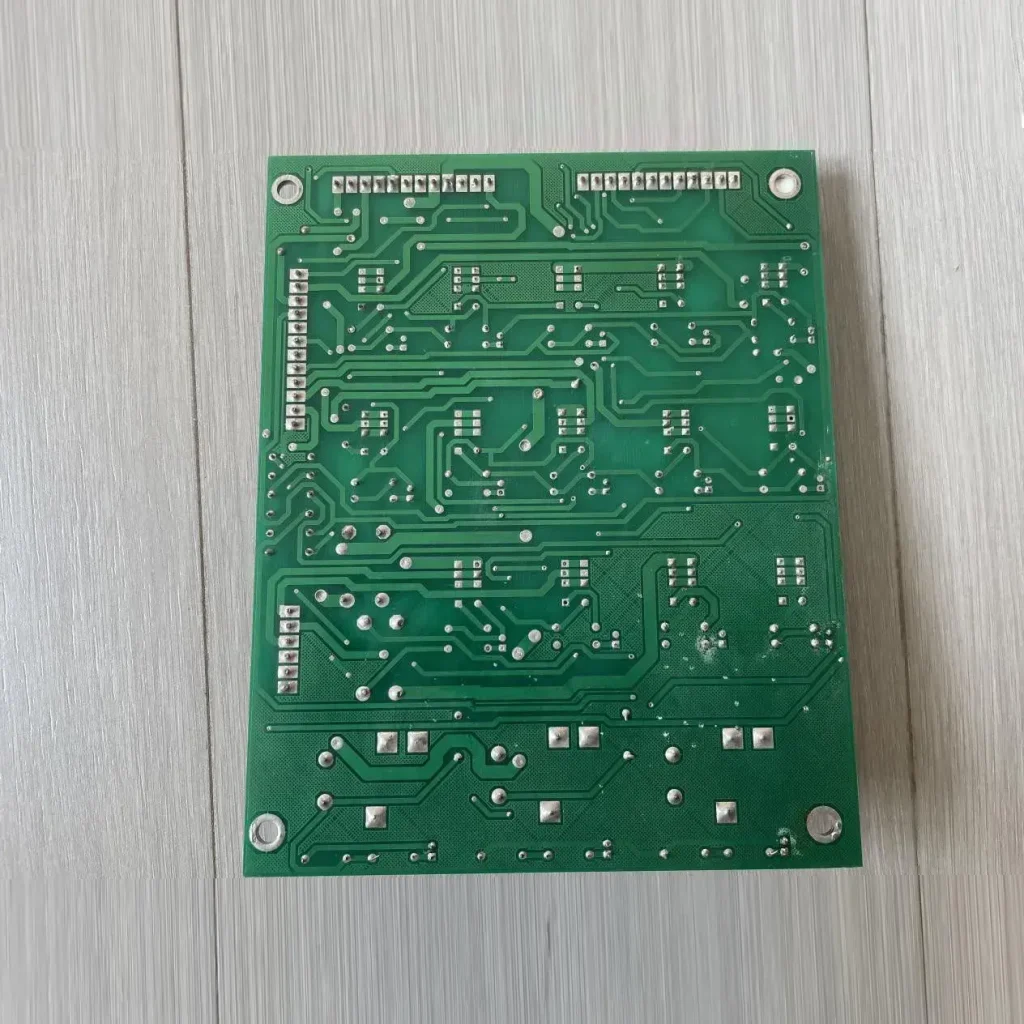 Zoomlion Original Power Control Board – ...
🔹 Core Functions Multi-circuit Power Distrib...
-
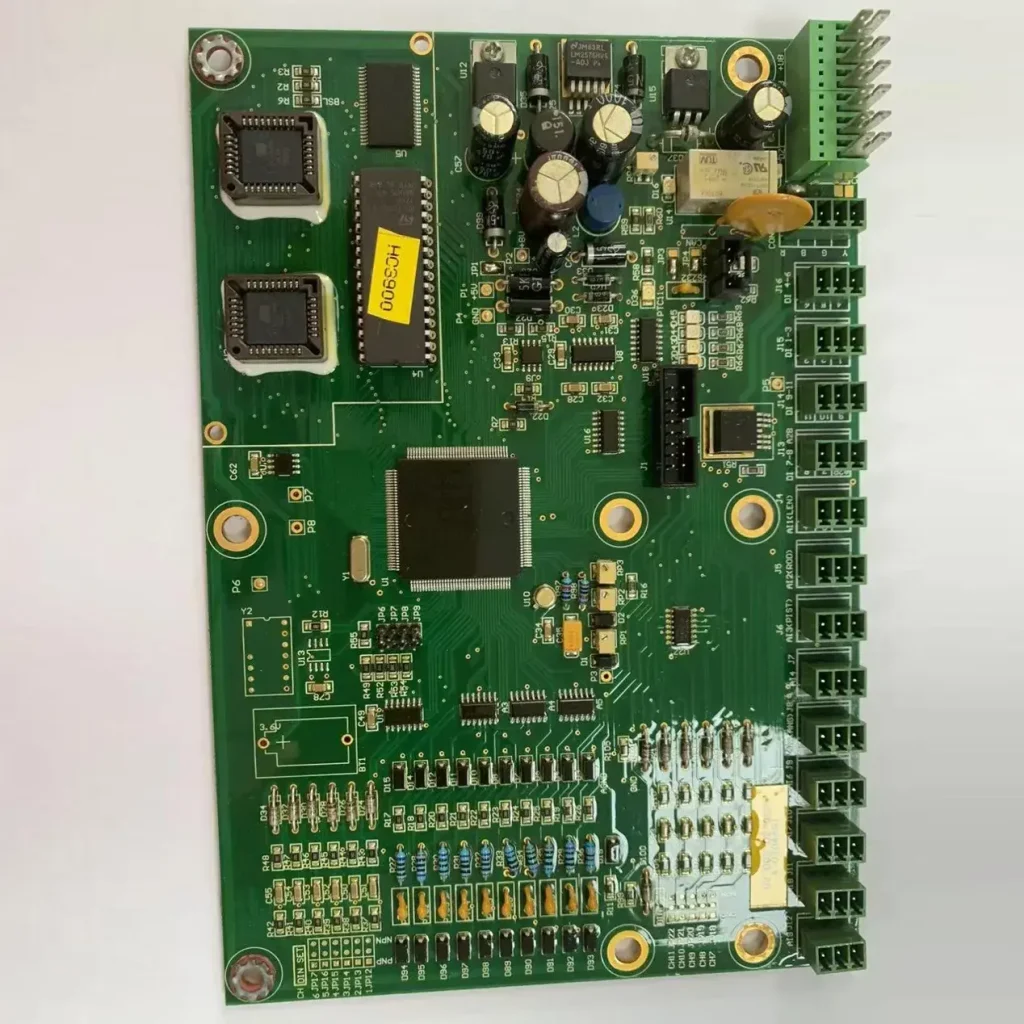 XCMG HC3900 Crane Upper Computer Mainboard
Key Selling Points OEM Direct Compatibility ...
-
 Zoomlion Mobile Crane Load Moment Indicator (LM...
Product Overview This is an original equipment...